Developing Elite High School Quarterbacks for 2025 Dominance
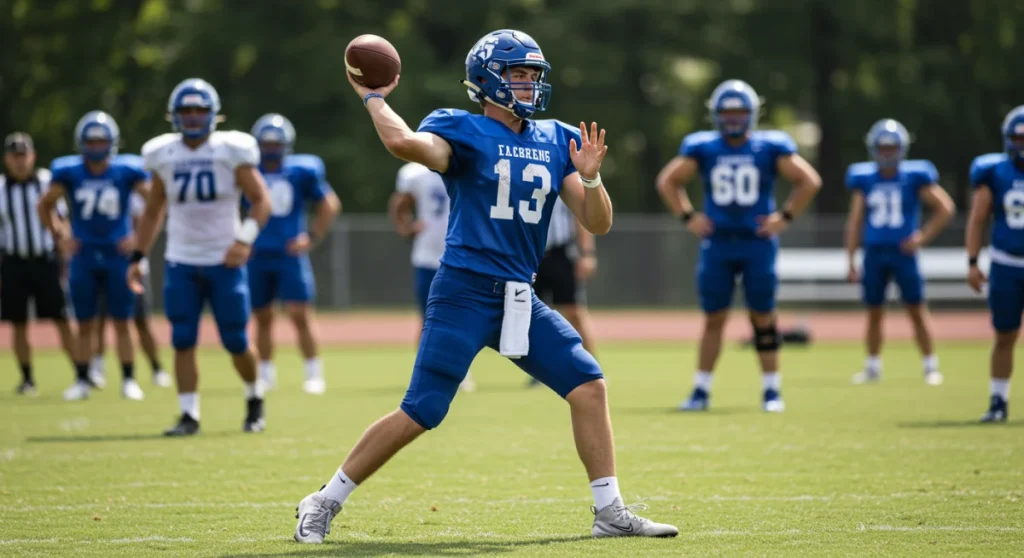
Developing elite high school quarterbacks requires a comprehensive approach focusing on physical skills, mental acumen, and leadership qualities, essential for dominating the upcoming 2025 football season.
Are you ready to elevate your team’s performance and secure a dominant 2025 season? The journey to developing elite high school quarterbacks is a challenging yet incredibly rewarding endeavor, demanding a blend of physical prowess, mental sharpness, and unwavering leadership. This guide will delve into critical aspects of quarterback development, providing actionable insights and essential drills to transform potential into gridiron excellence.
The foundation of quarterback excellence
Building an elite high school quarterback isn’t just about raw talent; it’s about cultivating a comprehensive skill set that includes mechanical precision, tactical understanding, and a strong mental game. The foundation begins with understanding the core responsibilities of the position and how each component contributes to overall success on the field.
A quarterback’s role extends beyond merely throwing the football. They are the field general, responsible for reading defenses, making quick decisions, and inspiring their teammates. Without a solid foundation in these areas, even the most gifted athletes will struggle to consistently perform at a high level. Developing this foundation requires meticulous attention to detail and a commitment to continuous improvement.
Understanding the modern QB role
The game of football has evolved, and so has the quarterback position. Today’s elite high school quarterbacks are often dual threats, capable of making plays with both their arm and their legs. They must be able to execute complex offensive schemes, adapt to changing game situations, and maintain composure under pressure. This demands a broader skill set than ever before.
- Exceptional arm talent and accuracy
- Advanced decision-making under duress
- Leadership and communication skills
- Athleticism and mobility
The mental game: beyond the physical
While physical attributes are crucial, the mental game often separates good quarterbacks from great ones. This includes game intelligence, the ability to anticipate defensive schemes, and the confidence to lead their team. Mental toughness allows quarterbacks to shake off mistakes and remain focused on the next play, a critical trait for success.
Developing mental fortitude involves consistent exposure to high-pressure situations in practice, coupled with film study and strategic discussions. Coaches play a vital role in fostering this aspect, creating an environment where quarterbacks feel empowered to learn from their errors and grow. The ability to process information rapidly and make sound judgments is a cornerstone of elite performance.
Ultimately, a strong foundation in both physical and mental aspects is non-negotiable for any aspiring elite high school quarterback. It sets the stage for mastering the specific drills and techniques that will lead to dominance in the 2025 season.
Drill 1: footwork and pocket presence mastery
Footwork is the unsung hero of quarterback play. Flawless footwork ensures balance, power, and accuracy, directly impacting a quarterback’s ability to deliver the ball effectively. Pocket presence, on the other hand, is the art of navigating the chaos within the offensive line, stepping up, or sliding away from pressure while keeping eyes downfield.
These two skills are intrinsically linked. A quarterback with excellent footwork can more easily maintain their pocket presence, allowing them to extend plays and find open receivers. Conversely, poor footwork can lead to hurried throws, inaccurate passes, and unnecessary sacks. Therefore, dedicated drills for these areas are paramount.
Three-step and five-step drop drills
These fundamental drills establish the rhythm and timing necessary for quick and efficient deliveries. Quarterbacks must master the precise steps, weight transfer, and hip rotation required for each drop, ensuring they arrive at their throwing platform ready to unleash the ball with power and accuracy.
- Focus on consistent depth and quickness
- Emphasize a strong, balanced base
- Practice getting the ball out quickly after the drop
Pocket movement and escape drills
The pocket is rarely static. Quarterbacks must learn to subtly shift and slide within its confines, buying time and creating throwing lanes when protection breaks down. These drills simulate game-like pressure, forcing quarterbacks to react instinctively while maintaining their composure and vision.
Using cones or even defensive linemen to simulate pressure, quarterbacks can practice stepping up into the pocket, sliding laterally, and even scrambling out when necessary. The goal is to make these movements fluid and natural, ensuring that the quarterback’s eyes remain focused on downfield targets throughout the process. This agility and awareness are crucial for extending plays and avoiding negative yardage.
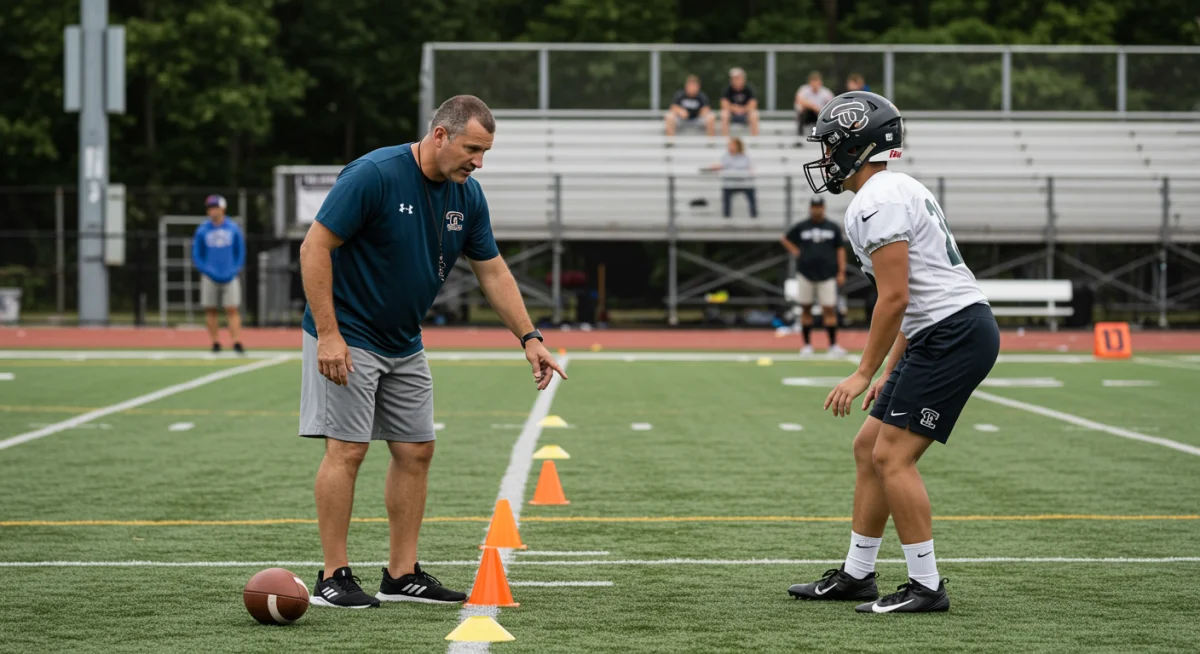
Mastering footwork and pocket presence is a continuous process that requires repetition and focus. By integrating these drills into daily practice, high school quarterbacks can significantly enhance their ability to operate efficiently and effectively under pressure, setting the stage for success in the 2025 season.
Drill 2: precision passing and accuracy challenges
Accuracy is arguably the most critical attribute of an elite quarterback. It’s not enough to simply throw the ball far; it must arrive precisely where it needs to be, allowing receivers to catch it in stride and maximize YAC (yards after catch). Precision passing drills push quarterbacks to hit tight windows, anticipate receiver breaks, and throw with optimal touch and velocity.
These challenges go beyond static throwing. They incorporate movement, defensive reads, and varying distances to replicate game-day scenarios. The goal is to build muscle memory and mental acuity, enabling quarterbacks to make accurate throws consistently, regardless of the situation.
Target practice with varying distances and angles
Utilize stationary and moving targets to simulate different receiving routes and defensive coverages. This drill helps quarterbacks adjust their arm angle and release point to deliver accurate passes from various positions on the field. Incorporating obstacles can further refine their ability to throw over or around defenders.
- Use football nets, hoops, or even old tires as targets
- Vary the distance from 5 yards to 40+ yards
- Practice throwing from different platforms (e.g., rolling out, stepping up)
The ‘tight window’ drill
This drill simulates throwing into small openings against tight coverage. Two defenders (coaches or teammates) stand close together, creating a narrow gap. The quarterback must throw the ball through this gap to a receiver, emphasizing touch, timing, and velocity control. This sharpens their ability to deliver catchable balls under pressure.
The ‘tight window’ drill can be scaled in difficulty by adjusting the width of the window or adding a moving element to the target. It forces quarterbacks to make split-second decisions and execute precise throws, mirroring the demands of real game situations. Consistent practice with this drill will build a quarterback’s confidence in their ability to fit passes into challenging spaces.
By consistently challenging quarterbacks with precision passing and accuracy drills, coaches can cultivate their ability to deliver the ball exactly where it needs to be. This level of accuracy is a hallmark of elite high school quarterbacks and a significant factor in offensive success for the 2025 season.
Drill 3: decision-making and reading defenses
An elite high school quarterback possesses not just a strong arm, but also a sharp mind. The ability to quickly read defensive schemes, identify coverage, and make the correct pre-snap and post-snap decisions is paramount. This mental aspect of the game often distinguishes truly exceptional quarterbacks from their peers. Developing this skill requires specific drills that simulate game-day pressure and force rapid cognitive processing.
Without a strong understanding of defensive principles, even the most physically gifted quarterback will struggle to consistently move the ball downfield. This drill focuses on honing their football IQ, transforming them into intelligent decision-makers.
Reading coverages drill
This drill involves presenting various defensive coverages (Cover 2, Cover 3, Cover 4, Man-to-Man) to the quarterback and having them identify the coverage and the primary and secondary reads. Coaches can use flashcards, pre-set defensive alignments, or even live defenders to create realistic scenarios. The quarterback must vocalize their read and explain their decision-making process.
- Start with simple coverages and gradually increase complexity
- Emphasize identifying safeties and cornerbacks’ alignments
- Drill the concept of ‘hot reads’ against blitzes
Progression reads drill
In this drill, the quarterback practices working through their progression of receivers based on the defensive read. Coaches can design plays with clear primary, secondary, and tertiary options. The quarterback must quickly scan the field, identify the open receiver, and deliver the ball. This drill is crucial for developing the ability to process information rapidly and make accurate throws under time constraints.
Adding a pass rush element to the progression reads drill further enhances its realism and effectiveness. This forces the quarterback to not only make the correct read but also to do so while navigating pocket pressure. The emphasis is on quick processing and getting the ball out efficiently, minimizing the chance for sacks or turnovers. This mental training is invaluable for any aspiring elite high school quarterback.
By consistently engaging in drills that challenge their decision-making and ability to read defenses, high school quarterbacks can significantly improve their football IQ. This mental edge will be a critical asset for success and dominance in the 2025 season.
Drill 4: leadership and communication development
Beyond physical skills and mental acuity, an elite high school quarterback must embody strong leadership and effective communication. They are the face of the offense, the one who rallies the troops, and the primary communicator of play calls and adjustments. These intangible qualities can be the difference between a good team and a championship contender. Leadership is not always innate; it can be developed through intentional practice and opportunities to lead.
A quarterback’s ability to inspire confidence and articulate instructions clearly is just as vital as their ability to throw a spiral. Without strong leadership, an offense can quickly devolve into disarray, especially during challenging moments.
Huddle and cadence command drill
This drill focuses on the quarterback’s ability to confidently call plays in the huddle, ensure all teammates understand their assignments, and then execute a clear and consistent cadence at the line of scrimmage. It’s about projecting confidence and control, making sure everyone is on the same page before the snap.
- Practice clear and concise play calling
- Vary cadence to keep the defense guessing
- Emphasize eye contact and body language
Situational communication exercises
Simulate various in-game scenarios where the quarterback needs to communicate effectively with their teammates. This could include calling audibles at the line, adjusting protection schemes, or communicating changes in routes. The goal is to build their confidence in making these calls and ensuring their teammates understand and react appropriately.
Coaches can create scenarios where the offense is behind late in the game, facing a critical third down, or needing a two-minute drill. These high-pressure situations test the quarterback’s ability to remain calm, think clearly, and communicate effectively under duress. Providing opportunities for quarterbacks to lead team discussions and problem-solving sessions can also foster their leadership skills. Developing these communication and leadership traits is essential for developing elite high school quarterbacks who can guide their team to success in the 2025 season.
Through dedicated practice in communication and leadership, high school quarterbacks can transform into true field generals, capable of commanding their offense and inspiring their team to achieve greatness. These soft skills are invaluable for any aspiring elite high school quarterback.
Drill 5: scrambling and improvisation
Not every play goes according to plan. Elite high school quarterbacks often distinguish themselves by their ability to extend plays, improvise, and make something out of nothing when the initial design breaks down. This involves a combination of athleticism, awareness, and creative thinking. Scrambling is not just about running; it’s about buying time to throw or making a calculated decision to run for yardage.
These drills prepare quarterbacks for the unpredictable nature of football, ensuring they can remain dangerous even when under extreme pressure. The ability to improvise can turn a potential sack into a big gain, a crucial skill for any modern quarterback.
Broken play drill
In this drill, coaches intentionally disrupt the offensive line or coverage scheme, forcing the quarterback to react without a pre-determined plan. The quarterback must then either find an open receiver downfield while scrambling or tuck the ball and run for positive yardage. This drill emphasizes quick decision-making and situational awareness.
- Simulate a collapsing pocket or missed blocks
- Encourage quarterbacks to keep their eyes downfield
- Practice throwing on the run from various angles
Two-minute drill simulations
These intense, fast-paced scenarios demand quarterbacks to manage the clock, make quick decisions, and execute plays under immense pressure. It often involves extending plays and improvising, as defenses are typically aggressive in these situations. This drill hones both the physical and mental aspects of scrambling and improvisation.
The two-minute drill also tests a quarterback’s leadership and communication skills, as they must effectively manage the offense and ensure everyone understands the urgency of the situation. By regularly exposing quarterbacks to these high-stress environments, coaches can build their confidence and ability to perform when it matters most. Mastering scrambling and improvisation is a key differentiator for developing elite high school quarterbacks ready for the 2025 season.
By incorporating drills that focus on scrambling and improvisation, high school quarterbacks can become more versatile and dangerous playmakers. This adaptability is a crucial trait for navigating the challenges of a competitive football season.
Drill 6: film study and mental preparation
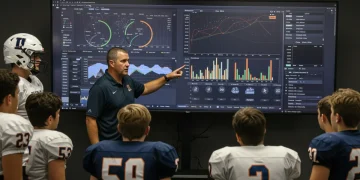
While physical drills are essential, the development of an elite high school quarterback is incomplete without rigorous film study and mental preparation. The game of football is as much mental as it is physical, and understanding opponents, recognizing tendencies, and visualizing success prior to game day can provide a significant competitive advantage. Film study allows quarterbacks to learn from their mistakes, analyze defensive schemes, and identify opportunities for exploitation.
Mental preparation encompasses everything from pre-game routines to visualization techniques, all designed to ensure the quarterback is in the optimal state of mind to perform. This often overlooked aspect is a hallmark of truly elite players at all levels of football.
Opponent film breakdown sessions
Dedicated sessions where quarterbacks meticulously break down film of upcoming opponents are critical. This involves identifying defensive fronts, coverage tendencies, blitz packages, and individual player strengths and weaknesses. The goal is to walk onto the field on game day with a clear understanding of what to expect.
- Teach quarterbacks how to identify defensive alignments
- Focus on recognizing pre-snap reads and post-snap adjustments
- Discuss potential weaknesses to exploit
Visualization and mental rehearsal
Encourage quarterbacks to mentally rehearse plays, visualize successful throws, and anticipate game situations. This practice helps to build confidence, reduce anxiety, and improve reaction time. Visualization can be done independently or guided by coaches, focusing on specific scenarios or entire game flows.
Mental rehearsal is a powerful tool for enhancing performance, allowing quarterbacks to effectively practice without expending physical energy. It reinforces proper technique and decision-making, making those actions more automatic during actual game play. By combining thorough film study with consistent mental preparation, high school quarterbacks can develop an unparalleled understanding of the game, positioning them for success in the 2025 season. This comprehensive approach to mental training is a cornerstone of developing elite high school quarterbacks.
Investing time in film study and mental preparation elevates a quarterback’s game beyond the physical. It sharpens their instincts, enhances their decision-making, and builds the confidence required to lead a team to victory. These are the tools that truly separate the good from the elite.
| Key Drill | Benefit for QBs |
|---|---|
| Footwork Mastery | Enhances balance, throwing power, and pocket navigation. |
| Accuracy Challenges | Improves precision passing into tight windows and varying distances. |
| Decision-Making Drills | Sharpens ability to read defenses and make quick, correct reads. |
| Leadership Development | Builds confidence in communication and commanding the offense. |
Frequently Asked Questions about QB Development
While many skills are crucial, accuracy is arguably the most important. A quarterback must consistently deliver the ball precisely to their receivers, enabling them to make plays. Without accuracy, even a strong arm or good decision-making is less effective, limiting offensive production and potential.
Improving decision-making involves extensive film study, practicing reading defenses, and engaging in progression read drills. Simulating game-like scenarios in practice, where quick reads are necessary, also significantly hones this skill. Understanding defensive tendencies helps anticipate plays and make smarter choices.
Not necessarily, but dual-threat quarterbacks offer increased versatility, which is highly valued in modern football. Their ability to extend plays with their legs or scramble for yardage adds another dimension to the offense. However, a pure pocket passer with elite accuracy and decision-making can be equally effective, depending on the offensive scheme.
High school quarterbacks should dedicate at least 3-5 hours per week to film study, both individually and with coaches. This includes reviewing personal performance, analyzing upcoming opponents, and studying professional quarterbacks. Consistent film work deepens understanding and improves in-game recognition and adjustments.
Mental preparation is critical for an elite quarterback. It includes visualization, stress management, and maintaining composure under pressure. A strong mental game reduces anxiety, enhances focus, and allows quarterbacks to perform consistently at their best, especially in crucial game situations and during challenging moments.
Conclusion
The journey to developing elite high school quarterbacks is multifaceted, requiring a dedicated approach that encompasses physical drills, mental conditioning, and strong leadership development. By focusing on fundamental footwork, precision passing, astute decision-making, effective communication, and the ability to improvise, coaches can cultivate comprehensive athletes capable of leading their teams to victory. Integrating rigorous film study and mental preparation further refines these skills, ensuring that quarterbacks are not only physically ready but also mentally sharp for the demands of the game. For the 2025 season, the emphasis on these six core areas will undoubtedly pave the way for high school quarterbacks to achieve unparalleled success and dominate the competition.