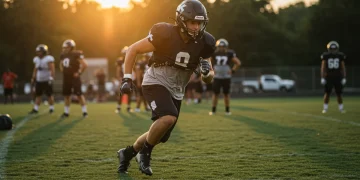
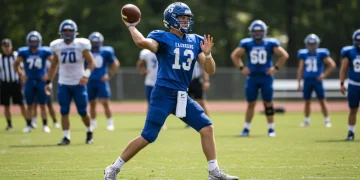
High School Football Combine Prep: 8 Weeks to Maximize 2025 Scouting
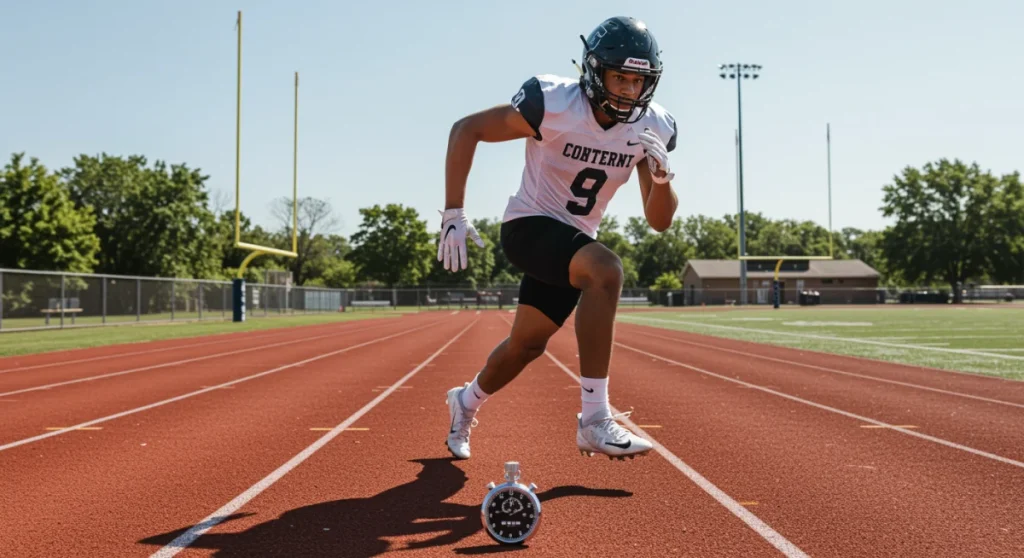
Preparing for a high school football combine involves a strategic 8-week program focusing on speed, agility, strength, and mental resilience to optimize performance and attract collegiate scouts for the 2025 season.
Are you ready to elevate your game and catch the eyes of college scouts? Mastering your high school football combine preparation over an intense eight-week period can dramatically improve your 2025 scouting performance, setting you apart from the competition and opening doors to collegiate opportunities.
Understanding the Combine’s Importance
The high school football combine is more than just a series of drills; it’s a critical showcase of your athletic potential to college recruiters. It offers a standardized environment where your physical attributes and football-specific skills are objectively measured against your peers, providing scouts with crucial data points for evaluation.
Your performance in these events can significantly influence your recruitment prospects, as coaches often use combine results to identify athletes with the raw talent necessary to succeed at the next level. A strong showing demonstrates not only your physical capabilities but also your dedication and readiness for competitive football.
What Scouts Look For
Scouts aren’t just looking for raw speed or strength; they are evaluating a comprehensive athletic profile. They assess how well you translate your physical gifts into football-relevant movements and how you respond under pressure. Understanding these expectations is the first step in tailoring your preparation.
- Measurable Athletics: Speed (40-yard dash), agility (shuttle run, 3-cone drill), and explosiveness (vertical jump, broad jump) are key.
- Position-Specific Drills: How you perform in drills relevant to your position, showcasing your functional football skills.
- Mental Toughness: Your ability to maintain focus, execute under pressure, and demonstrate a competitive spirit.
Ultimately, a successful combine performance can solidify a scout’s interest, leading to further evaluations, visits, and potentially, scholarship offers. It’s an investment in your football future that demands strategic and disciplined preparation.
The 8-Week Training Blueprint: Weeks 1-2 – Foundation Building
The initial two weeks of your football combine preparation are crucial for establishing a solid athletic foundation. This phase focuses on enhancing general strength, improving cardiovascular endurance, and refining movement mechanics. It’s about building the engine before demanding peak performance from it.
Resistance training during these weeks should emphasize compound movements that engage multiple muscle groups, fostering overall muscular development. Think squats, deadlifts, bench presses, and overhead presses, performed with proper form to prevent injury and maximize gains. Cardiovascular workouts should include a mix of steady-state running and interval training to build both aerobic and anaerobic capacity.
Core Strength and Flexibility
A strong core is the linchpin of athletic performance, providing stability and power for all movements. Incorporate exercises like planks, Russian twists, and leg raises into your daily routine. Flexibility and mobility work, including dynamic stretches before workouts and static stretches afterward, are equally vital for injury prevention and improving range of motion.
- Compound Lifts: Squats, deadlifts, bench press for overall strength.
- Cardio Mix: Longer runs for endurance, short sprints for anaerobic capacity.
- Core Focus: Planks, bird-dog, anti-rotation exercises.
By prioritizing these foundational elements, you’re not just preparing for the combine; you’re building a more robust, resilient athlete. This initial phase sets the stage for the more intense, combine-specific training that will follow, ensuring your body is ready to handle the increased demands without breaking down.
Weeks 3-4: Speed and Agility Development
With a solid foundation in place, weeks 3 and 4 shift focus to the critical combine events: speed and agility. These are often the most scrutinized aspects by scouts, as they directly correlate with on-field performance. This period is dedicated to improving your 40-yard dash, shuttle run, and 3-cone drill times through targeted drills and precise technique work.
For speed, emphasize burst training, focusing on explosiveness off the line and maintaining top-end speed. Drills like flying 10s, resisted sprints, and acceleration runs are paramount. Agility training involves mastering quick changes of direction, body control, and efficient footwork. Cone drills, ladder drills, and specific shuttle run repetitions will be your allies.
Technique Refinement
Raw speed and agility are important, but proper technique can shave off precious milliseconds. Work closely with coaches or trainers to analyze your running form, starting stance, and transition movements. Small adjustments in arm swing, knee drive, or body lean can yield significant improvements.
- 40-Yard Dash Focus: Explosive start, powerful acceleration, maintaining top speed.
- Shuttle/3-Cone Drills: Efficient cuts, low center of gravity, rapid direction changes.
- Footwork Drills: Ladder drills, quick feet exercises for improved coordination.
This phase is about precision and repetition. Every drill should be executed with maximum effort and attention to detail, simulating combine conditions as closely as possible. Consistent effort in these areas will directly translate to faster times and a more impressive display for scouts.
Weeks 5-6: Power and Explosiveness Training
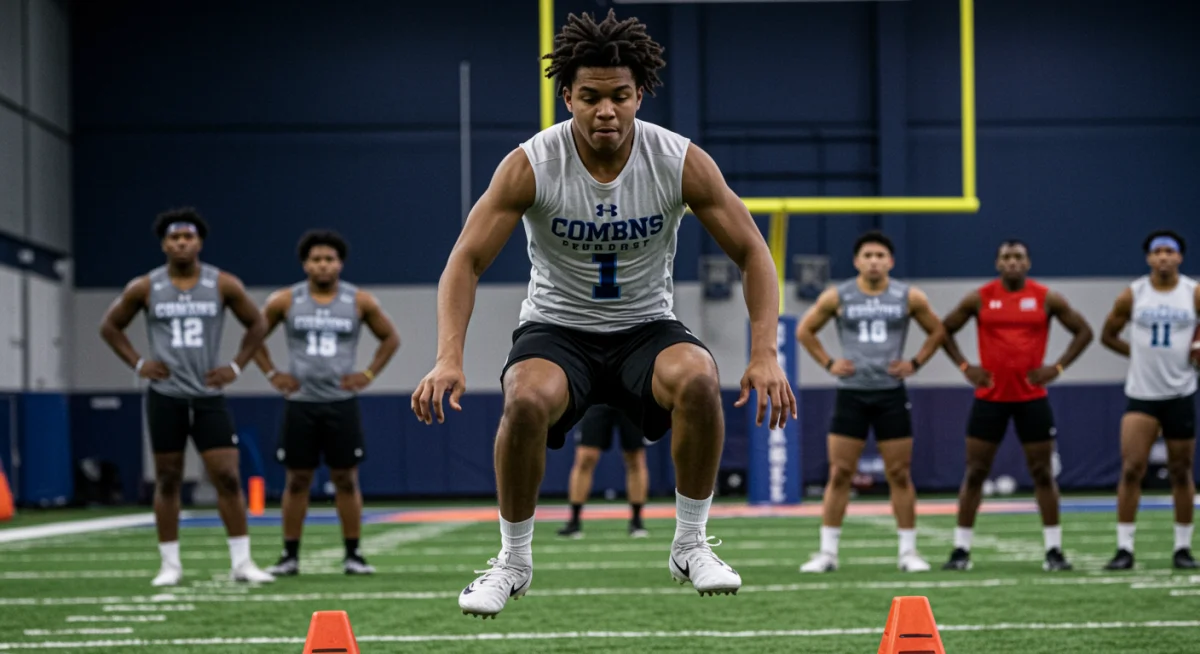
As you near the combine, weeks 5 and 6 are dedicated to maximizing power and explosiveness, critical for events like the vertical jump, broad jump, and position-specific drills. This phase builds upon your foundational strength and introduces more plyometric and Olympic lifting variations to develop rapid force production.
Plyometrics, such as box jumps, depth jumps, and bounding, are excellent for improving reactive strength and elasticity, directly translating to higher jumps and more powerful movements. Incorporating Olympic lifts like power cleans and snatches, under proper supervision, can significantly boost overall power output, but be sure to prioritize safety and correct form.
Maximizing Vertical and Broad Jumps
For the vertical jump, focus on developing a powerful countermovement and arm swing. For the broad jump, emphasize a strong horizontal drive and controlled landing. Practice these movements repeatedly, paying close attention to technique to optimize your performance.
- Plyometric Exercises: Box jumps, depth jumps, broad jumps for explosive power.
- Olympic Lifts (supervised): Power cleans, snatches to develop rapid force.
- Jump Technique: Focus on arm swing, hip drive, and landing mechanics.
This phase is intense, requiring full commitment and careful management of fatigue. The goal is to peak your power output, ensuring you demonstrate maximum explosiveness when it matters most. Proper recovery, including nutrition and sleep, becomes even more critical during these high-demand weeks.
Weeks 7-8: Combine Simulation and Mental Preparation
The final two weeks are about fine-tuning your performance and sharpening your mental edge. This phase transitions from heavy training to combine simulation, allowing your body to recover while keeping your skills sharp. It’s also a crucial time for mental preparation, ensuring you arrive confident and ready to perform.
Conduct full combine simulations, replicating the exact order and intensity of the drills you’ll face. This helps you get accustomed to the flow of the event, manage your energy, and identify any areas that still need minor adjustments. Reduce the volume of your workouts, but maintain intensity, focusing on quality over quantity to ensure you are fresh on combine day.
Nutrition and Recovery
Optimal nutrition and recovery are paramount in these final weeks. Focus on a balanced diet rich in lean proteins, complex carbohydrates, and healthy fats to fuel your body and aid muscle repair. Prioritize sleep, aiming for 8-10 hours per night, as this is when your body truly recovers and adapts to training.
- Simulate Combine Day: Practice drills in sequence, managing energy and transitions.
- Tapering Workouts: Reduce volume, maintain intensity to ensure freshness.
- Mental Rehearsal: Visualize success, practice stress management techniques.
Mental preparation includes visualizing successful performances, practicing mindfulness, and developing strategies to manage pre-combine nerves. Confidence stems from preparation, and by this point, you should be confident in the work you’ve put in. Arrive at the combine well-rested, well-fueled, and mentally prepared to showcase your best self.
Nutrition, Hydration, and Recovery Strategies
Beyond the physical drills, what you put into your body and how you recover are just as vital for maximizing your football combine preparation. Proper nutrition, consistent hydration, and strategic recovery protocols are the unsung heroes of peak performance, allowing your body to adapt, rebuild, and perform at its highest level.
Your diet should be a cornerstone of your training, providing the necessary fuel for intense workouts and the building blocks for muscle repair. This means a consistent intake of high-quality protein, complex carbohydrates for sustained energy, and healthy fats for hormone production and overall health. Avoid processed foods, excessive sugars, and unhealthy fats, which can hinder recovery and performance.
Strategic Hydration
Dehydration can significantly impair athletic performance, affecting everything from energy levels to cognitive function. Make hydration a priority throughout your 8-week program, not just on combine day. Drink water consistently throughout the day, and consider electrolyte-enhanced beverages during and after intense training sessions, especially in warmer climates.
- Balanced Macronutrients: Adequate protein, complex carbs, and healthy fats.
- Consistent Hydration: Drink water throughout the day, electrolytes during intense workouts.
- Active Recovery: Light cardio, stretching, foam rolling to reduce soreness.
Recovery extends beyond just rest; it includes active recovery techniques like light cardio, stretching, and foam rolling to improve blood flow and reduce muscle soreness. Incorporate regular massage or self-myofascial release, and prioritize 8-10 hours of quality sleep per night. These strategies collectively ensure your body is always ready for the next challenge, preventing burnout and promoting continuous improvement.
The Mental Game: Confidence and Focus
Physical readiness is only half the battle; the mental game is equally critical for a successful high school football combine preparation. Scouts are not just evaluating your athletic prowess but also your composure, resilience, and focus under pressure. Developing a strong mental approach can be the differentiator that elevates your performance.
Confidence is built through consistent, diligent preparation. When you know you’ve put in the work, you step onto the combine field with a natural sense of assurance. Beyond that, techniques like visualization can be incredibly powerful. Mentally rehearse each drill, imagining yourself executing perfectly, feeling the explosiveness, and seeing the successful outcome. This mental walkthrough primes your brain and body for optimal performance.
Managing Pressure and Nerves
It’s natural to feel nervous, but learning to channel that energy can be a significant advantage. Practice mindfulness and controlled breathing techniques to stay present and calm. Focus on the process of each drill, rather than the outcome or the presence of scouts. Break down each event into smaller, manageable steps, and concentrate on executing one step at a time.
- Visualization: Mentally practice each drill, envisioning success.
- Breathing Techniques: Use controlled breathing to manage nerves and stay calm.
- Positive Self-Talk: Replace negative thoughts with affirming statements.
Remember that the combine is an opportunity to showcase your best self. Embrace the challenge, trust your training, and let your passion for the game shine through. A confident, focused athlete not only performs better physically but also leaves a lasting positive impression on scouts, demonstrating readiness for the demands of collegiate football.
| Key Preparation Area | Brief Description |
|---|---|
| Foundation Building | Weeks 1-2: General strength, cardio, core, and flexibility. |
| Speed & Agility | Weeks 3-4: Targeted drills for 40-yard dash, shuttle, and 3-cone. |
| Power & Explosiveness | Weeks 5-6: Plyometrics, Olympic lifts for vertical & broad jumps. |
| Combine Simulation & Mental Prep | Weeks 7-8: Tapering, visualization, nutrition, and recovery. |
Frequently Asked Questions about Combine Preparation
The 40-yard dash is highly important as it’s a direct measure of speed, a critical attribute in football. While not the only factor, a strong time can significantly boost a scout’s interest, especially for skill positions, demonstrating explosive acceleration and top-end speed.
Yes, with a focused and disciplined 8-week program, significant improvements in speed, agility, and power are absolutely achievable. Consistency, proper technique, and dedicated effort are key to maximizing your gains within this timeframe and making a noticeable difference.
Nutrition is foundational. A balanced diet fuels intense training, aids muscle recovery, and optimizes energy levels. Proper hydration and nutrient intake prevent fatigue, enhance performance, and ensure your body is in peak condition for the combine, directly impacting your results.
While a holistic approach is best, it’s wise to prioritize drills that are most relevant to your position and where you have the greatest potential for improvement. Consulting with a coach can help identify your strengths and weaknesses, allowing for a more targeted and efficient preparation strategy.
Managing anxiety involves thorough preparation, visualization, and relaxation techniques. Trusting your training, focusing on the process rather than the outcome, and using controlled breathing can help calm nerves. Remember, the combine is an opportunity to showcase your hard work and talent.
Conclusion
Embarking on an 8-week journey of high school football combine preparation is a significant commitment that can profoundly influence your collegiate football prospects. By meticulously following a structured plan that addresses physical conditioning, skill refinement, mental resilience, and proper recovery, you equip yourself to perform at your absolute best. This comprehensive approach not only maximizes your 2025 scouting performance but also instills invaluable discipline and confidence, paving the way for a successful transition to the next level of your football career.