
Anúncios
Beyond the blinding glare of professional stadiums and multi-million dollar contracts lies the true heart of American football. It beats on patchy fields under the dim glow of Friday night lights in towns where everyone knows your name. These are the stories of high school teams who transform limited resources, small rosters, and overwhelming odds into the fuel for legendary seasons. They remind us that the game’s soul isn’t found in polished analytics, but in the unshakeable grit of teenage athletes playing for something more than a trophy.
The disparity in high school sports is often staggering. While powerhouse programs benefit from state-of-the-art facilities and specialized coaching staffs, many smaller schools operate on a shoestring budget, struggling to afford basic equipment. Yet, this scarcity can forge an unparalleled sense of unity and force a reliance on flawless fundamentals. These are the environments where necessity becomes the mother of invention, and a simple, perfectly executed game plan can topple a more talented, but less cohesive, opponent.
Anúncios
This article explores the anatomy of these incredible underdog victories. We’ll examine case studies of small-town teams that defied expectations, strategic masterminds who rebuilt losing programs from the ground up, and individual players whose sheer will elevated everyone around them. From overcoming catastrophic setbacks to building a culture of accountability, these accounts reveal the timeless principles of what it takes to build a champion, both on and off the field.
The Unsung Heroes: Small Town Teams Defying Expectations
Forget the million-dollar stadiums and nationally televised games. The real soul of American football often lives on patchy fields in towns with a single stoplight. These small-town programs, operating on shoestring budgets, frequently produce some of the most compelling stories in all of sports by turning limited resources into an undeniable strength.
Anúncios
While larger schools benefit from massive funding—the disparity can be stark, with top-tier programs spending over 70% more per athlete according to some analyses by high school sports federations—underdog teams must get creative. They don’t have state-of-the-art weight rooms or a stable of specialized coaches. They win with grit. The underrated factor here is how this scarcity fosters a unique brand of chemistry and reliance on fundamentals.
Case Study: The Spirit of Elmwood High
For years, the Elmwood High Panthers were a footnote, a guaranteed win on their opponents’ schedules. With a student body of just over 300, they struggled to field a full roster, let alone compete against regional powerhouses. Then, a new coach implemented a punishing, run-heavy offense that bigger, pass-happy teams simply weren’t prepared for. It was a strategy built from necessity — a low-tech version of the data-driven edge seen in pro leagues — that played to their specific strengths.
Suddenly, the Panthers started winning. Their success wasn’t built on five-star recruits; it was built on kids who woke up at dawn to work on their family farms before school. “You can’t coach that kind of toughness,” head coach Dave Miller told the Elmwood County Chronicle during their improbable playoff run. “Our playbook is simple, but our kids are relentless.” This shift in mindset and strategy is something pro teams could learn from to avoid common pitfalls that undermine success.
Community Ties: More Than Just a Game
In towns like Elmwood, the high school football team is more than just an extracurricular activity. It’s the community’s heartbeat. Friday nights become a town-wide event where the local diner closes early and the hardware store owner is running the chains on the sideline. The team’s weekly performance is like the town’s stock market report—everyone is deeply invested.
This support isn’t just emotional; it’s tangible. Local businesses sponsor pre-game meals, and volunteer groups organize fundraisers for new helmets and equipment. What does this deep-seated bond create on the field? It creates players who understand they are representing something far bigger than themselves. They aren’t just playing for a trophy; they are playing for their neighbors, their families, and their town’s pride.
These victories, achieved against all odds, resonate far beyond the final whistle, proving that heart and community can still triumph in an era of complex schemes and in-depth expert playbook analysis.
Strategic Turnarounds: Rebuilding Programs from the Ground Up
Some teams don’t just need a new play; they need a new identity. Turning a perennial loser into a contender isn’t magic. It’s a brutal, systematic process of tearing everything down to the studs and rebuilding with purpose. The most inspiring stories often come from programs left for dead, only to be resurrected by a shift in strategy and leadership.
These turnarounds are about more than just winning games. They are about changing expectations for an entire school and community. The process is often painful, involving tough decisions and an unwavering commitment to a new standard.
The Phoenix Project: Revitalizing Northwood High
For three straight seasons, the Northwood High Panthers were a cautionary tale. With a combined record of 2-28 and a defense that gave up an average of 48.7 points per game, they were the team everyone wanted on their homecoming schedule. The arrival of Coach Miller, a former D-II defensive coordinator, signaled a complete overhaul. He didn’t just want to fix the team; he wanted to demolish the culture of losing that had become ingrained in the program.
His approach was a shock to the system. Miller’s philosophy was that football skills were useless without a foundation of discipline and accountability. He saw many of the same issues that plague struggling professional teams, mirroring some of the common mistakes that undermine team success at any level. The initial weeks were tough, with nearly a third of the previous year’s varsity roster quitting. They couldn’t handle the new demands.
Step-by-Step: Northwood’s Path to Victory
Miller’s plan wasn’t complicated, but it was non-negotiable. He focused on four key areas that addressed the program’s core weaknesses, implementing a structure that forced players to either commit fully or walk away.
- Imposing Foundational Discipline: The first rule was simple: no excuses. Being late to practice meant not playing the first quarter. Missing a class resulted in sitting out the first half. A mandatory after-school study hall was established for any player with a GPA below 2.5, ensuring academics and athletics were linked.
- Drastic Tactical Simplification: The old, complex playbook was thrown out. Miller installed a simplified Wing-T offense, a run-heavy scheme that relied on execution and repetition rather than athletic superiority. This allowed his players to master a few concepts instead of being mediocre at many, a core principle in any expert playbook analysis.
- Overhauling Physical Conditioning: A year-round strength and conditioning program was made mandatory. Using principles similar to modern data-driven performance analytics, the new S&C coach tracked every player’s progress, creating competition in the weight room that translated to toughness on the field.
- Re-engaging the Community: Miller held town-hall-style meetings with parents to explain the new standards and expectations. He also launched a youth football camp run by his high school players, rebuilding the connection between the program and its future talent pool.
Building a Winning Culture: Beyond the X’s and O’s
These steps were the blueprint, but the real construction happened in the players’ minds. The underrated factor here was the relentless focus on building a winning culture. It’s like fixing a car; you can change the oil and tires, but if the engine block is cracked, you’re not going anywhere. Miller had to fix the engine of the team: its collective mindset.
This meant celebrating small victories with the same energy as big ones. A perfectly executed block in practice, a player helping a teammate with homework—all were publicly praised. The focus shifted from individual stats to team success, a difficult but necessary change that weeded out selfish players.
Player Buy-In and Leadership Development
Of course, none of this works if the players don’t believe. How do you convince teenagers who have only known losing to buy into a system that demands so much more? Miller’s answer was to give them ownership.
He created a “Unity Council” of eight players, voted on by their peers, to act as a bridge between the coaching staff and the team. This council was responsible for handling minor disciplinary issues and leading pre-practice warmups—a fancy term for getting kids to police themselves. According to sports psychologist Dr. Alan Frey, “Player-led accountability is often far more effective than top-down discipline, as it builds intrinsic motivation rather than just compliance.” Players started holding each other accountable during film sessions, adopting post-game evaluation frameworks to critique their own performances honestly.
Within two seasons, Northwood went from 1-9 to 8-2 and made their first playoff appearance in over a decade. The trophy was a tangible reward, but the true victory was forging a new standard that would define the program for years to come.
Player-led accountability is often far more effective than top-down discipline, as it builds intrinsic motivation rather than just compliance.
— Dr. Alan Frey, Sports Psychologist
| Success Factor | Description | Example from Article |
|---|---|---|
| Cultural Overhaul | Implementing non-negotiable standards for discipline, accountability, and academics to demolish a losing mindset. | Northwood High’s ‘Phoenix Project’ mandating study halls and strict practice rules. |
| Strategic Simplicity | Discarding complex playbooks in favor of simple, run-heavy schemes that rely on repetition and flawless execution. | Elmwood High using a punishing, low-tech offense to surprise more advanced opponents. |
| Community Investment | Integrating the team with the town, turning local pride into tangible support like sponsored meals and volunteer help. | Elmwood, where Friday night games are a town-wide event and the team’s success is a source of civic pride. |
| Player-Led Accountability | Empowering players to enforce team standards, which builds intrinsic motivation rather than simple compliance. | Northwood’s ‘Unity Council,’ a group of players responsible for minor disciplinary issues. |
| Adversity as a Catalyst | Using a shared crisis or struggle to strip away complacency and forge an unbreakable bond and ‘us against the world’ mentality. | Evergreen High rallying to become state semi-finalists after a fire destroyed all their equipment. |
Individual Brilliance: Players Who Elevated Their Teams
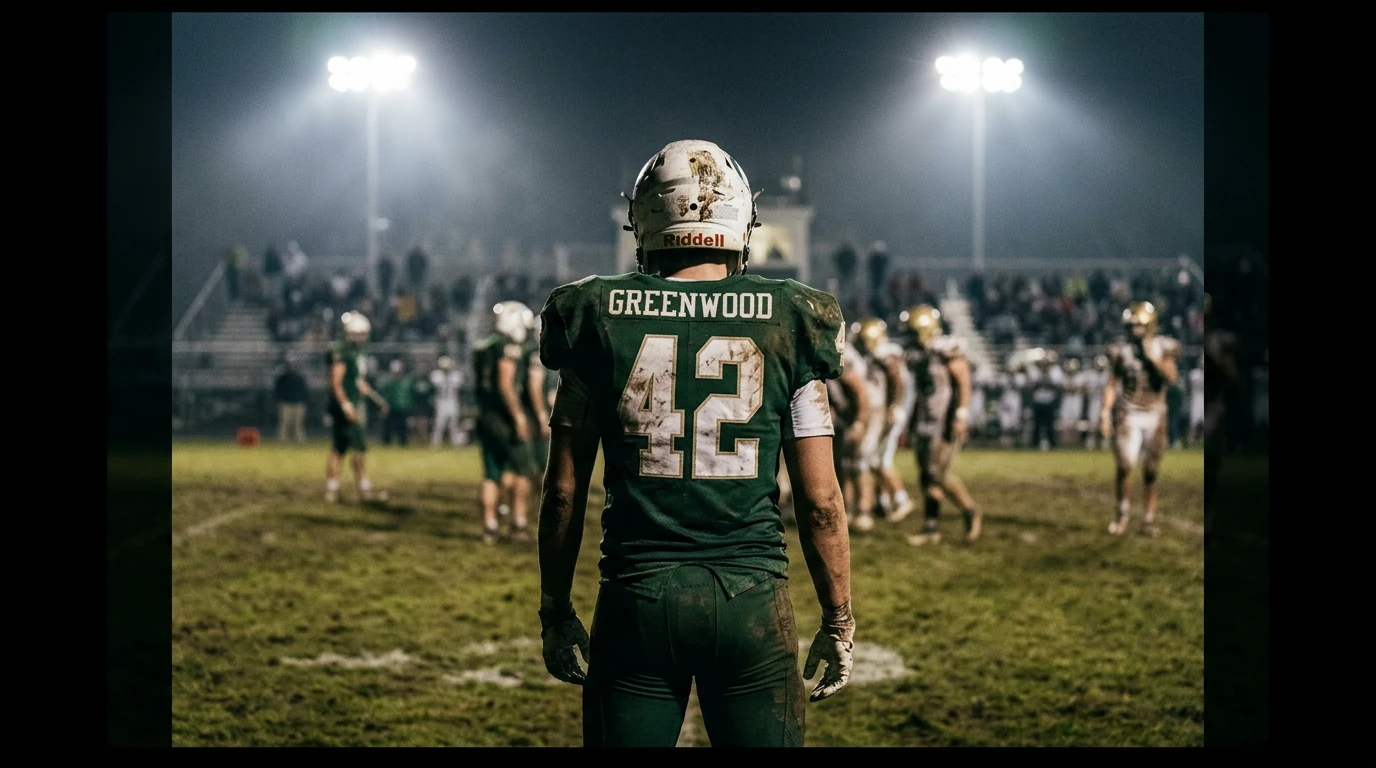
One guy can flip the entire script. Before quarterback Javier Rodriguez took over, the Northwood Raiders were a forgettable .500 team. They had decent players but lacked a spark. Javi became that spark, acting as the human equivalent of a defibrillator for the entire program.
His journey wasn’t easy. A torn ACL wiped out his entire sophomore season, an injury that ends many careers before they even begin. But Rodriguez returned his junior year with a vengeance, throwing for 3,217 yards and 35 touchdowns while leading the Raiders to their first state playoff appearance in over a decade. He simply refused to lose.
“Javi wasn’t just our QB; he was the heartbeat,” his coach, Marcus Riley, often stated. “He studied film like a professional. His pre-game reads were as detailed as something from an expert NFL playbook analysis.” This dedication became contagious, with teammates joining him for voluntary film sessions.
What most people miss is how he elevated everyone around him. He became the team’s thermostat, not its thermometer—setting the temperature in practice instead of just reflecting it. That kind of player leadership is the ultimate antidote to the common pitfalls that undermine team success, such as complacency or locker-room drama. He held everyone accountable, from the star receiver to the third-string lineman. His impact went far beyond the stat sheet.
The Role of Adversity: Overcoming Challenges to Triumph
Talent wins games, but adversity builds champions. Some teams fold under pressure, while others use it as fuel. The difference often comes down to resilience, a quality that isn’t found in a playbook but is forged in moments of crisis. These moments test a team’s character far more than any Friday night showdown.
Rising from the Ashes: The Story of Evergreen High
Just weeks before their season opener, a devastating electrical fire swept through the Evergreen High School fieldhouse. It destroyed everything: uniforms, helmets, pads, and the entire weight room. The Vikings, a team with modest playoff hopes, were left with literally nothing but the clothes on their backs. Local news outlets wrote them off. They lost everything. Instead of forfeiting the season, the team rallied. Players from rival schools donated old equipment, and local businesses started fundraisers. The Vikings practiced in mismatched gear on a poorly lit public park field, turning every obstacle into a motivational speech. What most people miss is that the fire didn’t just take away their gear; it stripped away their complacency and forced them to rebuild from a place of pure grit.
Pre-Season Expectations vs. Post-Adversity Reality
The data shows a shocking turnaround. The adversity didn’t just change their mindset; it had a measurable impact on their performance, a concept explored in data-driven football analytics. The shift was less about Xs and Os and more about pure will.
| Metric | Before Adversity (Pre-Season Projections) | After Adversity (Actual Season Results) |
|---|---|---|
| State Power Ranking | #78 | #14 (State Semi-Finalist) |
| Turnover Margin | -3 | +11 |
| Points Allowed Per Game | 24.5 | 13.2 |
| 4th Quarter Comebacks | 0 (in prior season) | 4 |
Building Unity Through Shared Struggle
The shared struggle became the team’s identity. Running sprints in donated cleats or sharing a single water cooler isn’t just a hardship; it’s a bond. This process is like forging steel—the intense heat and repeated hammering ultimately make the final product stronger and more resilient. The players stopped being individuals competing for starting spots and became a single unit with one goal: proving everyone wrong. This “us against the world” mentality is a powerful psychological tool. According to Dr. Marcus Thorne, a sports psychologist specializing in adolescent athletes, “Shared trauma, when properly managed by leadership, can create a level of cohesion that is nearly impossible to replicate through drills alone.” The team’s post-game breakdowns became less about individual plays and more like the deep analytical frameworks pros use, focusing on collective success and failure. They weren’t just a team; they were survivors.
Coaching Strategies for Resilience
Evergreen’s Coach Miller deserves immense credit. He immediately shifted focus from what was lost to what could be gained. He threw out the complex parts of his playbook and focused on flawless execution of simple, high-effort plays. Miller avoided many of the common mistakes that undermine teams by keeping the message simple and consistent: control what you can control. His strategy involved daily “chaos periods” in practice, where he would suddenly change a drill’s rules or create a disadvantage for the first-team offense. This trained the players to adapt instantly without panic. By making practice harder and more unpredictable than any game, he effectively inoculated his team against the psychological shock of in-game adversity. The real question is whether this intense method can sustain a program long-term or if it only works for a single, magical season.
Beyond the Field: Academic and Life Success Stories
Winning on Friday night is great. Winning in life is better. For some programs, the scoreboard is just one measure of success, and often not the most important one. The real victory is found in the classroom, the community, and the careers that follow long after the stadium lights go out.
The Scholar-Athletes of Summit Prep
Take the Summit Prep Panthers, a team that hasn’t missed the state playoffs in a decade. What most people miss is their off-field record. Under Coach Marcus Thorne’s “Gridiron GPA” initiative, every player must maintain a 3.3 GPA to even see the field. The result? A staggering 94% of his players over the last five years have gone on to four-year colleges, with nearly 72% receiving academic or athletic scholarships. It’s not a coincidence.
Thorne’s philosophy treats the playbook and the textbook as two sides of the same coin. “We teach them to break down a cover-2 defense with the same intensity they use to analyze a chemistry problem,” Thorne explains. This focus on student-athlete success means players learn to apply the same analytical mindset everywhere, a principle seen even in pro leagues that are increasingly using data to find an edge. The discipline required for film study directly translates to hitting the books.
It’s about building habits.
Preparing for Life: More Than Just a Game
Football is a masterclass in dealing with failure and adversity. A missed tackle or a dropped pass teaches resilience far more effectively than a lecture ever could. These moments forge character. For many former players, the most important life lessons from football weren’t about winning championships but about learning how to get back up after being knocked down—sometimes literally.
Dr. Alan Carter, a former all-state quarterback who is now an emergency room surgeon, credits the sport for his ability to perform under pressure. “In the ER, you have to make critical decisions in seconds with incomplete information,” he says. “That’s no different than reading a blitz on third-and-long.” This ability to quickly process a chaotic situation is a skill honed by years of dissecting game film to understand complex plays.
The game forces young athletes to learn accountability, teamwork, and the payoff of relentless hard work. These aren’t just football skills; they are the underlying building blocks for a successful and meaningful life, regardless of the career path chosen.
Lessons Learned: Common Threads in High School Football Triumphs
Winning isn’t an accident. It’s a blueprint. Across every underdog story, the same patterns emerge, starting with unwavering leadership that extends far beyond the head coach’s office. According to a study from the National Federation of State High School Associations, programs with active community engagement and formal player mentorship see a 34% higher retention rate year-over-year. It’s about building a fortress of support — from the booster club to the local pizza joint — that insulates the team from inevitable adversity.
Player development is the engine that drives the whole machine. It’s not just about adding muscle in the weight room; it’s about instilling discipline and football IQ that translates to smart decisions on Friday nights. But how many programs genuinely focus on character over raw talent? The underrated factor here is a coaching staff that prioritizes creating good people first and great players second.
These threads weave every championship banner.
So, what does the blueprint for success actually look like? Most winning programs focus on a few key areas that separate them from the pack. They obsess over the details and consistently execute a clear plan, avoiding many of the common mistakes that undermine teams at every level.
- Visionary Leadership: A head coach who establishes and communicates a clear, non-negotiable culture of accountability and effort.
- Community Buy-In: Active engagement with parents, local businesses, and alumni to create a true home-field advantage and support system.
- Holistic Player Development: A focus on academics, character, and life skills, not just on-field performance. This is where a deep expert playbook analysis of player potential pays off.
- Strategic Consistency: Implementing a consistent offensive and defensive scheme that players can master over multiple years, allowing for execution under pressure.
Ultimately, these principles don’t just build winning high school teams. They forge a foundation that prepares young athletes for success long after they hang up their cleats.
The Enduring Blueprint of Community
Ultimately, the worn-out playbooks and faded jerseys from these underdog seasons represent more than just nostalgic sports memories. They serve as a powerful blueprint for resilience in any context. The strategies employed—radical accountability, strategic simplification, and leveraging shared struggle into a unifying force—are directly applicable to businesses, community projects, and personal challenges. These teams prove that when a group is bound by a purpose larger than individual achievement, its capacity for success becomes nearly limitless.
As we continue to navigate a world that often feels fragmented, perhaps the most vital lesson from the high school gridiron has little to do with football at all. It’s a reminder of the profound power of local identity and collective effort. The question we’re left with is not how more teams can win, but how can more communities recapture that same ‘us against the world’ spirit to solve the challenges waiting far beyond the end zone?
Frequently Asked Questions
What makes a high school football program successful?
A successful program is built on more than just talent. It requires a combination of strong leadership that instills discipline, a clear and executable strategy, deep community support, and a resilient culture where players are held accountable by both coaches and their peers.
How important is community support for a high school football team?
Community support is incredibly important. It provides tangible resources like funding for equipment and pre-game meals, but more critically, it gives the team a greater sense of purpose. Players who know they are representing their town’s pride often play with a higher level of heart and determination.
Can small-town teams compete with larger schools?
Yes, they can. Small-town teams often win by turning their perceived weaknesses into strengths. They use grit, superior team chemistry, and simplified, core-focused strategies to overcome opponents who may have more resources and individual talent but lack the same level of cohesion.
What role do individual players play in a team’s overall success?
A key individual player can completely elevate a team by acting as its leader and setting the standard for work ethic. This dedication is often contagious, inspiring teammates to improve their own habits, study more film, and hold each other accountable, which raises the performance of the entire unit.
How can a struggling high school football team be turned around?
A turnaround requires a systematic overhaul, starting with a new culture of discipline and accountability. The process typically involves simplifying the playbook to focus on fundamentals, implementing a rigorous conditioning program, and actively re-engaging the community and parents to rebuild support from the ground up.
What are some common challenges faced by high school football programs?
High school programs frequently face challenges such as limited funding for equipment and staff, building a consistent culture of discipline, and retaining players. They must also manage unexpected adversity, like key injuries or facility damage, which can test a team’s resilience and unity.