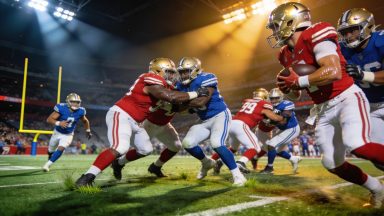
Practical Solutions: 3 Coaching Adjustments That Turned the Tide in Close 2026 NFL Games Last Month
In the high-stakes world of the National Football League, victory often hinges on razor-thin margins. The difference between a win and a loss can be a single play, a missed tackle, or, more frequently, a pivotal coaching decision. As the 2026 NFL season continues to unfold, last month delivered a series of incredibly close contests, where the strategic acumen of head coaches and their staff was put to the ultimate test. These aren’t just moments of inspiration; they are the culmination of countless hours of preparation, film study, and an innate understanding of the game’s ebb and flow. This article dives deep into three specific instances of NFL coaching adjustments that dramatically altered the trajectory of close games, transforming potential defeats into hard-fought victories. We will dissect the context, the strategic shift, and the immediate impact of these critical in-game decisions.
The Art of In-Game Adaptation: Why NFL Coaching Adjustments Matter
Football is often described as a chess match, and nowhere is this more evident than in the strategic battles waged between coaching staffs. While game plans are meticulously crafted during the week, the best coaches possess the foresight and flexibility to adapt when those plans inevitably encounter resistance. The opposition isn’t static; they adapt, they counter, and they exploit weaknesses. This constant give-and-take necessitates dynamic NFL coaching adjustments. These adjustments can range from subtle personnel changes and minor schematic tweaks to wholesale shifts in offensive or defensive philosophy. The timing, the courage to deviate from the script, and the ability to effectively communicate these changes to the players are all hallmarks of elite coaching.
Last month’s slate of NFL games provided a masterclass in this very concept. Several matchups went down to the wire, with teams exchanging blows until the final whistle. In these pressure-cooker situations, the coaches who could accurately diagnose the problem, devise a solution, and execute it efficiently were the ones who saw their teams emerge victorious. It’s a testament to the fact that even with the most talented rosters, strategic superiority can often be the decisive factor.
Let’s explore some of these game-changing moments and understand the underlying principles behind these successful NFL coaching adjustments.
Adjustment 1: The Defensive Coordinator’s Blitz Package Overhaul
In a thrilling Week 7 clash between the Arizona Cardinals and the Seattle Seahawks, the game was deadlocked at 20-20 with just over five minutes remaining in the fourth quarter. The Seahawks’ high-powered offense, led by their veteran quarterback, had been systematically dicing up the Cardinals’ base defense for most of the second half, primarily through quick passes and screens designed to neutralize the Cardinals’ pass rush. The Cardinals’ defensive coordinator, known for his aggressive schemes, had seen his initial blitzes picked up consistently, leaving his secondary vulnerable.
The Problem: Predictable Pressure and Vulnerable Secondary
The Seahawks’ offensive line was doing an excellent job of identifying the Cardinals’ blitzing linebackers and defensive backs. They were using slide protections and chip blocks to give their quarterback just enough time to deliver the ball to his receivers in space. The Cardinals’ defensive ends, while talented, weren’t generating enough consistent pressure on their own, and the secondary was being asked to cover for too long against a precision passing attack. The predictable nature of the Cardinals’ blitzes meant the Seahawks’ quarterback could anticipate the pressure and get rid of the ball before it arrived.
The Adjustment: Unconventional Blitz Angles and Coverage Disguises
Recognizing that his traditional blitz packages were ineffective, the defensive coordinator made a bold move. Instead of sending linebackers up the middle or edge rushers from the wide side, he began to dial up delayed blitzes from unexpected angles. He started using defensive tackles to drop into coverage occasionally, creating confusion for the offensive line, and sending cornerbacks on corner blitzes, something rarely seen in his playbook. More importantly, he implemented a series of pre-snap coverage disguises. Instead of showing man coverage and then blitzing, he would show zone and blitz, or vice versa, making it impossible for the Seahawks’ quarterback to read the defense before the snap.
This was a significant NFL coaching adjustment because it went against the coordinator’s established tendencies. It required the players to execute complex assignments under immense pressure, but the coordinator had instilled the confidence and understanding necessary for them to succeed.
The Impact: Game-Changing Turnovers and a Stifled Offense
The immediate impact was profound. On the Seahawks’ next drive, a delayed corner blitz resulted in a sack and a fumble, which the Cardinals recovered deep in Seahawks territory. This led to a crucial field goal, putting the Cardinals up 23-20. On the Seahawks’ final possession, attempting to drive for a game-tying field goal or winning touchdown, another disguised blitz, this time with a defensive tackle dropping into a shallow zone, forced an errant pass that was intercepted. The Cardinals held on for a dramatic victory, all thanks to a daring and perfectly executed defensive overhaul.
This example perfectly illustrates how a well-timed and well-executed NFL coaching adjustment on defense can completely flip the script of a game. It wasn’t just about sending more pressure; it was about sending different pressure and making the opponent guess.
Adjustment 2: The Offensive Coordinator’s Commitment to the Run
In a tightly contested AFC East rivalry game in Week 8, the Buffalo Bills found themselves trailing the Miami Dolphins 17-14 at halftime. Their star quarterback had been struggling with accuracy, and the Dolphins’ defensive line was generating consistent pressure, forcing quick throws and disrupting the Bills’ rhythm. The Bills’ offensive coordinator, typically known for his pass-heavy scheme, faced a dilemma: continue to lean on his struggling quarterback or pivot to an aspect of their offense that hadn’t been fully utilized.
The Problem: Pass Protection Breakdown and Quarterback Struggles
The Dolphins’ defensive front was winning at the line of scrimmage, collapsing the pocket and making life incredibly difficult for the Bills’ quarterback. The Bills’ offensive line, while talented, was having trouble containing the Dolphins’ exotic blitz packages. This pressure was leading to hurried decisions, inaccurate throws, and a general lack of offensive flow. Despite having a capable running back, the Bills had largely abandoned the run in the first half, attempting only eight carries.
The Adjustment: A Ground-and-Pound Philosophy Shift
During the halftime break, the offensive coordinator made a critical NFL coaching adjustment: a decisive commitment to the run game. He instructed his offensive line to focus on establishing the line of scrimmage and opening up running lanes. He called a series of power runs, outside zones, and even some read-option plays to get his running back more involved. This wasn’t just about running the ball more; it was about running it with conviction and using it to set up play-action passes later in the game.
This strategic shift was a gamble, as it meant taking the ball out of the hands of their franchise quarterback, at least initially. However, the coordinator understood that they needed to alleviate pressure on their quarterback and wear down the Dolphins’ aggressive pass rush.
The Impact: Sustained Drives and Time of Possession Dominance
The second half saw a completely different Bills offense. They ran the ball on their first five plays of the third quarter, gaining valuable yardage and moving the chains. The Dolphins’ defensive line, which had been so effective in rushing the passer, now had to contend with powerful run blocks. This allowed the Bills to control the clock, keeping the Dolphins’ potent offense off the field. As the Dolphins’ defense tired, the Bills’ quarterback found more time in the pocket, and his accuracy improved.
The Bills scored two touchdowns in the third quarter, both coming off drives that featured a heavy dose of running plays, ultimately winning the game 28-24. The commitment to the run not only revitalized their offense but also served as a defensive strategy, limiting the opportunities for their opponent. This was a classic example of an NFL coaching adjustment that prioritized game control and exploited a developing weakness in the opponent’s defense.
Adjustment 3: The Special Teams Coordinator’s Onside Kick Surprise
Sometimes, the most impactful NFL coaching adjustments come from unexpected places. In a thrilling Week 9 contest between the Denver Broncos and the Kansas City Chiefs, the Broncos found themselves down 31-28 with just 1:30 left on the clock. They had just scored a touchdown to cut the deficit to three points, but conventional wisdom dictated they kick deep, hoping for a defensive stop to get the ball back. However, the Broncos’ special teams coordinator had a different plan.
The Problem: Limited Time, High-Powered Opponent Offense
The Chiefs’ offense was virtually unstoppable in the fourth quarter. Giving them the ball back with 90 seconds and all three timeouts would almost certainly result in them running out the clock or, at worst, kicking a game-winning field goal. The Broncos’ defense had struggled to get stops against the Chiefs’ dynamic attack throughout the game, and relying on them for a last-minute miracle seemed like a long shot. The situation demanded an aggressive, unconventional approach.
The Adjustment: The Perfectly Executed Surprise Onside Kick
The special teams coordinator, in conjunction with the head coach, made the audacious call for an onside kick. This isn’t just about kicking the ball short; it’s about a meticulously planned and practiced execution. The kick was designed to bounce high and short, targeting a specific area where the Chiefs’ hands team was known to be less athletic. The Broncos’ players were coached to sprint downfield immediately and aggressively attack the ball, regardless of who touched it first.
This was a high-risk, high-reward NFL coaching adjustment. A failed onside kick would hand the Chiefs excellent field position and effectively end the game. However, the potential reward – an extra possession with a chance to tie or win – was deemed worth the risk given the circumstances.
The Impact: A Stunned Opponent and a Game-Winning Drive
The onside kick was executed flawlessly. The ball took a perfect bounce, and a Broncos’ special teams player, fighting through two Chiefs’ players, recovered the ball at midfield. The stadium erupted. The Chiefs, clearly stunned by the unexpected turn of events, had to quickly adjust their mindset. With renewed momentum, the Broncos’ offense, given a second life, marched down the field. Two big passes and a crucial run later, they kicked a game-winning field goal as time expired, snatching victory from the jaws of defeat with a 31-30 win.
This example highlights the power of a well-timed and perfectly executed special teams NFL coaching adjustment. It wasn’t about scheme adjustments on offense or defense, but a strategic gamble on a specific play that completely shifted momentum and provided an opportunity that wouldn’t have otherwise existed.
The Psychology Behind Game-Changing NFL Coaching Adjustments
Beyond the X’s and O’s, there’s a significant psychological component to successful NFL coaching adjustments. Coaches must not only analyze the game effectively but also instill confidence in their players to execute new strategies under immense pressure. A coach’s demeanor, their ability to communicate clearly and concisely, and their trust in their players are all vital. When a coach makes a bold adjustment, they are essentially telling their team, “I believe in you to pull this off.” This belief can be a powerful motivator.
Furthermore, these adjustments often involve risk. Sticking to the original game plan, even if it’s failing, can feel safer. However, great coaches understand that sometimes the greatest risk is inaction. The courage to deviate, to innovate, and to trust your instincts in the heat of the moment is what separates the good from the truly elite. The 2026 NFL season, as evidenced by last month’s games, continues to showcase coaches who are not afraid to make these critical calls.
The ability to identify a flaw in the current strategy, formulate a counter-strategy, and then effectively implement it within the chaotic environment of an NFL game is a skill that few possess. It requires an intimate knowledge of your own team’s strengths and weaknesses, as well as a deep understanding of the opponent’s tendencies and vulnerabilities. It’s about thinking several steps ahead, much like a grandmaster in chess, anticipating not just the next move, but the cascade of moves that will follow.
Consider the mental fortitude required. Imagine being a defensive coordinator, seeing your highly touted blitz packages consistently picked apart. The easy response is to continue with what you know, perhaps hoping for a lucky break. The courageous response, however, is to completely revamp your approach, to introduce elements your players might not have practiced extensively, and to trust that they will execute. This level of trust and strategic daring is what defined the Cardinals’ defensive adjustment.
Similarly, for an offensive coordinator, abandoning a pass-heavy scheme when your star quarterback is struggling can be a difficult pill to swallow. There’s an inherent pressure to let your best players make plays. But the Bills’ coordinator understood that the path to victory, in that specific moment, lay in a more methodical, ground-oriented approach. This demonstrated a pragmatic and results-driven mindset, prioritizing the team’s success over individual statistics or preferred play-calling tendencies.
And then there’s the special teams aspect. The onside kick call is perhaps the most visible and immediate gamble a coach can make. It’s a binary outcome: either you get the ball back, or you lose the game. The sheer nerve to make that call, to have the play practiced to perfection, and to have the conviction that your players will recover the ball, speaks volumes about the coaching staff’s belief system. It’s a moment where all the preparation, all the practice, and all the psychological conditioning of your players converge into one decisive play.
The Long-Term Impact of Effective NFL Coaching Adjustments
These game-winning NFL coaching adjustments do more than just secure a single victory. They build character within a team, fostering resilience and adaptability. When players see their coaches make bold, successful moves, it strengthens their trust and belief in the system. This can have a ripple effect throughout the season, empowering teams to perform better in future close game scenarios. It validates the hard work put in during practice and film sessions, reinforcing the idea that strategic thinking can overcome even the most formidable challenges.
Moreover, these adjustments contribute to the continuously evolving landscape of NFL strategy. When one team finds success with a particular adjustment, other teams take notice. They study the film, analyze the tactics, and incorporate similar concepts into their own playbooks, or devise counter-strategies. This constant innovation is what makes the NFL such a dynamic and captivating league, where the strategic arms race among coaching staffs never truly ends.
The ability to adapt is not just a desirable trait for NFL coaches; it’s an absolute necessity. The old adage, “If you’re not getting better, you’re getting worse,” applies directly to the strategic evolution required in professional football. Coaches who are rigid in their thinking, who refuse to deviate from their initial game plan, often find themselves on the losing end of close contests. The teams that consistently perform well, especially in tight games, are almost always led by coaches who are masters of in-game adaptation and strategic flexibility.
The three examples from last month’s 2026 NFL games serve as perfect illustrations of this principle. They demonstrate that while talent is crucial, it is often the strategic mind of the coaching staff that provides the ultimate advantage when the stakes are highest. These moments are etched into the memories of players and fans alike, not just for the outcome, but for the brilliant tactical decisions that led to those outcomes.
Conclusion: The Enduring Power of Strategic Adaptation in the NFL
The 2026 NFL season has already provided ample evidence that the margin for error in professional football is incredibly slim. In close games, where every snap can mean the difference between triumph and despair, the role of NFL coaching adjustments becomes paramount. The examples from last month – the defensive coordinator’s blitz package overhaul, the offensive coordinator’s commitment to the run, and the special teams coordinator’s surprise onside kick – are not just isolated incidents. They represent a fundamental truth of the sport: success often belongs to those who can think fastest, adapt most effectively, and execute under pressure.
These strategic shifts are a testament to the dedication, preparation, and sheer football IQ of the coaching staffs involved. They highlight that while the players execute on the field, the coaches are often the masterminds orchestrating the symphony of victory from the sidelines and in the booth. As the 2026 NFL season progresses, we can undoubtedly expect to see more such moments of brilliance, where critical NFL coaching adjustments continue to turn the tide in the league’s most nail-biting contests.
The beauty of football lies in its complexity and the endless strategic possibilities. These game-changing adjustments remind us that the human element, the intelligence and adaptability of coaches, remains one of the most exciting and influential factors in determining who wins and who loses on any given Sunday.