Anúncios
The National Football League is rapidly becoming something more than a sports league; it’s transforming into a global entertainment and technology enterprise that happens to play football. The bone-crushing hits and spectacular touchdowns are just the visible surface of a revolution happening in analytics departments, broadcast booths, and international boardrooms. The game on the field is merely the end product of a complex engine driven by data, media rights, and a relentless push for optimization.
For decades, the story of football was one of brute force and strategic wit. Today, that narrative is being rewritten by machine learning algorithms, biometric sensors, and multi-billion dollar streaming deals. This shift isn’t just changing how games are won or lost; it’s fundamentally altering how players are trained, how fans engage with the sport, and how the league itself generates revenue. From London to São Paulo, the NFL’s footprint is expanding, turning a uniquely American pastime into a worldwide phenomenon.
Anúncios
So, what does the future of football actually look like? This deep dive decodes the critical forces shaping the next era of the NFL. We will explore the strategic evolution of on-field play, the technological arms race optimizing player performance and fan experience, the league’s ambitious global expansion, and the economic shifts that will define the business of the sport for years to come. Forget what you think you know—the game is changing faster than ever.
The Evolving Landscape of NFL Game Play
The NFL game you think you know is already becoming a relic. Football is constantly in flux, with offensive and defensive philosophies clashing and adapting in a high-stakes chess match played out on a 100-yard board. The strategies that win Super Bowls one season are often obsolete just a few years later. This is the reality of modern football.
Anúncios
Strategic Shifts: Offense vs. Defense in the Coming Seasons
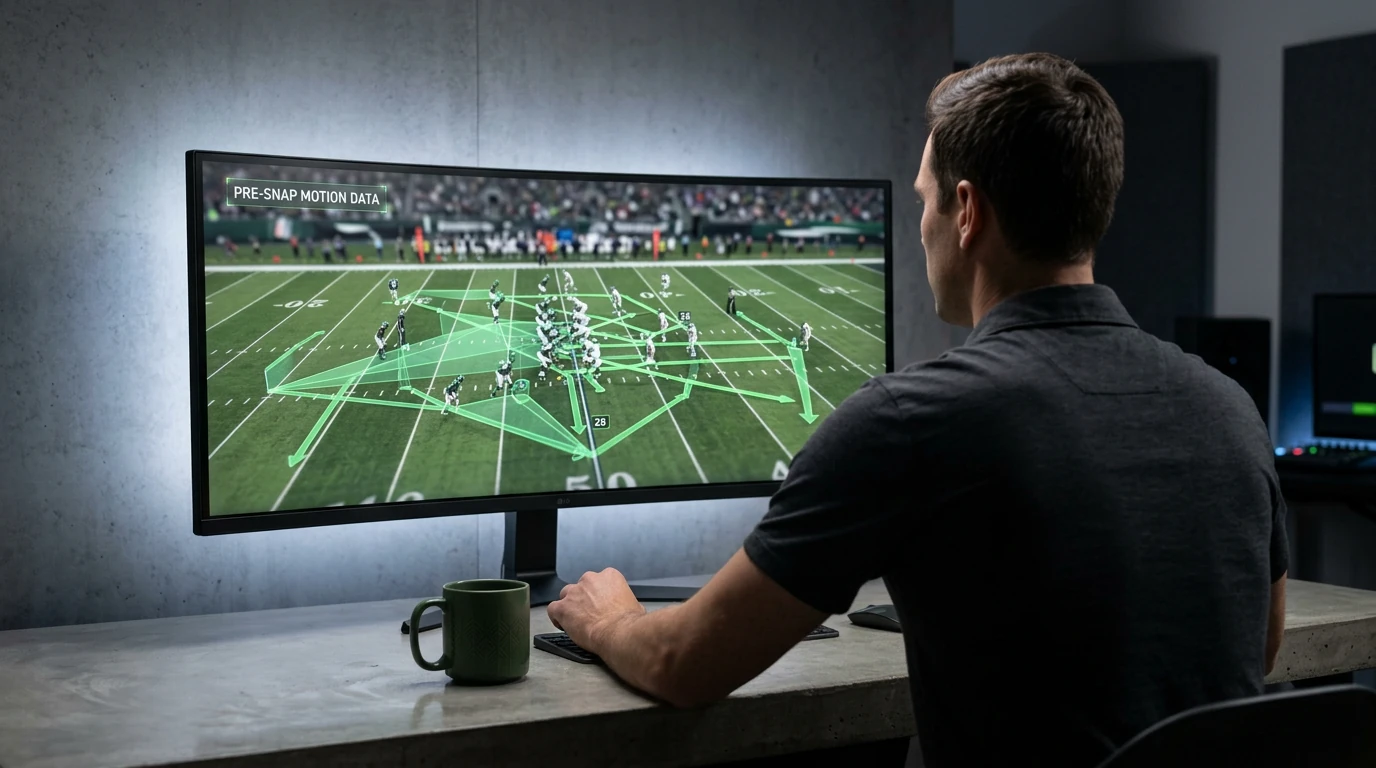
Offenses are running the show, and it’s not even close. The rise of pre-snap motion, run-pass options (RPOs), and quarterback-friendly schemes has put defensive coordinators in a bind. According to Pro Football Focus data, offenses utilized pre-snap motion on over 58% of plays last season, a significant jump from just a decade ago. This constant movement is designed to create defensive confusion and reveal coverages before the ball is even snapped. It’s like a poker player getting a peek at their opponent’s hand before the betting starts. Defenses are scrambling to find an answer. Some teams are leaning into more versatile, “positionless” players who can cover a slot receiver one play and rush the passer the next. The underrated factor here is the increasing importance of defensive communication, which becomes exponentially harder against complex offensive fronts. As one AFC scout told ESPN, “You’re asking guys to process a mountain of information in two seconds. One missed signal and it’s a 70-yard touchdown.” This forces teams to go back to basics, reinforcing the principles found in even the most basic expert playbook for unpacking matchups. The game is simply getting faster.
Anticipated Rule Adjustments and Their Consequences
The league’s competition committee is always tinkering with the rules, often with the stated goal of improving player safety. The recent modifications to kickoff rules are a prime example, completely altering the strategy for what was once a predictable play. But what’s next? I suspect the next major battleground will be penalties surrounding the quarterback, specifically “roughing the passer.” These calls are notoriously subjective and can swing the momentum of an entire game. Former Steelers coach Bill Cowher has been vocal about this, stating, “You’re telling a 280-pound lineman to defy physics. How can a player be expected to stop on a dime while trying to make a game-changing sack?” The league’s push for safety is understandable, but it creates a massive challenge for defensive players and the coaches who train them. Each new rule adds another layer to the complex analytical frameworks used for post-game evaluation. This constant push-and-pull between offensive firepower and defensive restrictions — often dictated by rule changes — will define the next era of professional football. The question isn’t whether the game will change, but which side of the ball will adapt first.
Technology’s Grip: Innovations Shaping Sports Performance
Technology is no longer just on the sidelines. It’s the new MVP. The days of relying solely on gut instinct and raw talent are fading fast, replaced by a data-fueled arms race where every millisecond and every calorie is tracked, analyzed, and optimized. This isn’t just about getting bigger, faster, and stronger; it’s about getting smarter.
The shift is seismic. Coaching staffs are now filled with data scientists, and locker rooms look more like tech labs. What most people miss is how this tech isn’t just changing the game for the pros; it’s rewriting the playbook for how athletes are developed from the ground up.
AI and Analytics: The Brains Behind Future Victories
Artificial intelligence is the new head coach’s most trusted advisor. Teams are using machine learning algorithms to dissect opponent tendencies with a level of detail that makes old-school film sessions look like watching cartoons. These systems can predict an opponent’s play call with startling accuracy based on formation, down, distance, and even the specific players on the field. It’s like having a crystal ball for every single snap.
According to a report from Zebra Technologies, the NFL’s official on-field player-tracking provider, teams using advanced analytics saw an average 7% improvement in red-zone efficiency. Think about it: how many games are won or lost inside the 20-yard line? This data-driven approach is turning probabilities into victories. The application of data-driven edges in modern football is no longer theoretical; it’s a core component of championship-caliber teams.
Wearables and Biometrics: Optimizing Player Health and Performance
The gear players wear is becoming as important as the playbook they study. Beyond simple GPS trackers, the next wave of wearables includes integrated bio-sensors woven directly into uniforms and padding. These devices monitor everything from heart rate variability and core body temperature to muscle exertion and hydration levels in real-time. This provides a constant stream of data that paints a complete picture of a player’s physical state.
This isn’t about micromanaging players; it’s about maximizing their careers. A coach can see if a receiver’s stride has shortened by a few centimeters over the course of a game — an early indicator of fatigue that could lead to a hamstring pull. This level of insight is changing everything from practice schedules to in-game substitutions.
Injury Prevention Through Predictive Modeling
The most significant application of biometric data lies in keeping players on the field. By feeding years of player data into predictive models, teams can now identify athletes who are at a heightened risk for specific injuries. For instance, the data might suggest — though not conclusively — that a lineman’s movement patterns indicate an increased likelihood of an ACL tear. The training staff can then intervene with targeted exercises to strengthen the vulnerable areas.
This is proactive medicine. It’s the difference between fixing a broken-down car and performing regular maintenance to ensure it never breaks down in the first place. The goal is to flag potential issues before they become season-ending disasters, a process that relies on some of the same top analytical frameworks used in post-game breakdowns.
Immersive Fan Engagement: Beyond the Screen
The tech revolution isn’t just for the players and coaches. The fan experience is about to get a massive upgrade. While current tech focuses on improving the at-home viewing experience with multiple camera angles and fantasy stats, the future is about bringing the stadium to you — and bringing you deeper into the stadium.
Augmented Reality (AR) will soon overlay stats, player info, and even ball trajectory directly onto your view of the field through your phone or specialized glasses. Imagine pointing your phone at the quarterback and instantly seeing his completion percentage against the blitz. This isn’t a gimmick; it’s a new layer of engagement that turns every fan into an analyst. The next step is to create personalized broadcasts where you control what you see, turning a passive viewing experience into an active one.
You’re telling a 280-pound lineman to defy physics. How can a player be expected to stop on a dime while trying to make a game-changing sack?
— Bill Cowher, Former NFL Coach
| Area of Change | Key Future Developments |
|---|---|
| Gameplay & Strategy | Increased use of pre-snap motion and RPOs; defenses adapting with ‘positionless’ players; ongoing rule changes impacting player safety and game flow, especially around the quarterback. |
| Technology & Analytics | AI-driven play prediction and opponent analysis; real-time biometric monitoring via wearable sensors to optimize performance and prevent injuries; augmented reality (AR) enhancing the fan viewing experience. |
| Global Expansion | More regular season games in new international markets like Spain and Australia; significant investment in grassroots programs abroad to cultivate a global fan base. |
| Business & Media | Continued fragmentation of media rights across streaming services (Amazon, Peacock); rising salary caps driven by massive media deals, intensifying pressure on team-building and contract negotiations. |
| Player Development | Scouting moving beyond the combine to focus on data-driven metrics from college game tracking; hyper-personalized training and nutrition regimens based on biometric and genetic data. |
Global Expansion: The NFL’s International Horizon
The NFL is no longer just America’s game. With regular season games drawing massive crowds in London, Munich, and now São Paulo, the league is aggressively planting its flag on foreign soil. The strategy isn’t just about selling a few extra tickets; it’s a full-scale campaign to create new legions of fans. According to a recent report from Nielsen Sports, non-US viewership has surged by an estimated 28% over the past three seasons alone, highlighting a massive, untapped market for American futebol.
This global push creates a complex dynamic for everyone involved. Players face grueling travel schedules that can disrupt their physical and mental preparation—a challenge that teams are still learning to manage. For international fans, it’s a chance to see their heroes in person rather than on a late-night broadcast. The underrated factor here is how these games build a new generation of fans who are just now learning the complex rules and strategies, many of whom are diving deep into esportes and understanding the game for the first time.
Building a sustainable international presence is more than just scheduling a few exhibition matches.
Simply dropping a game into a new city without building local infrastructure is like trying to grow a garden by tossing seeds onto pavement. The league has to invest in youth programs, local media partnerships, and fan events to cultivate a following. It’s a long-term play that requires avoiding common pitfalls that have tripped up other leagues attempting similar expansions. What’s the real measure of success—a sold-out stadium for one day, or a thriving flag football league for kids a year later?
As the league looks to the future, the question is no longer if it will expand further, but where. With markets like Spain and Australia on the radar, global fans are becoming more refined, using analytical frameworks for post-game evaluation just like their American counterparts. The next decade will likely determine whether the NFL can transition from a popular American export into a global sporting powerhouse.
The Business of Football: Economic Shifts and Media Rights
Follow the money. That’s the real future of the futebol e esportes landscape. The on-field battles are thrilling, but the financial chess matches happening in boardrooms are what will define the next decade of the sport. Team valuations are skyrocketing, driven by media rights deals that have completely rewritten the rules of sports broadcasting and consumption.
The average NFL team is now worth over $5.1 billion, according to Forbes, a 14% increase in just one year. This isn’t just organic growth; it’s a direct result of a calculated media strategy that embraces new platforms and a global audience. Traditional television is no longer the only king. This is a seismic shift.
Streaming Wars: The Battle for NFL Viewership
The league’s massive media rights deals, valued at over $110 billion, have sliced the viewing experience into a collection of subscriptions. One game is on Amazon Prime, another on Peacock, and your local team is still on broadcast TV. For fans, it’s like needing to go to three different grocery stores just to get the ingredients for a single dinner. The days of catching every game on one channel are officially over.
This fragmentation is deliberate. By partnering with tech giants like Amazon and Google (for NFL Sunday Ticket), the league taps into new revenue streams and, more importantly, vast pools of user data. What most people miss is how this data is used to tailor content and advertising. It’s a level of analysis that mirrors the on-field obsession with statistics, almost like a business version of the data-driven edge teams seek in performance analytics.
Player Salaries and the Salary Cap: What’s Next?
So, where does all that cash actually go? A huge chunk flows directly to the players through the salary cap. The cap, which hit $255.4 million for the most recent season, is directly tied to league revenue. As media deals grow, so do player contracts — creating a new class of super-wealthy athletes.
This cash infusion creates a fascinating tension for general managers. They have more money to spend, but the pressure to spend it wisely has never been higher. Every dollar of a quarterback’s record-breaking contract has to be justified with elite performance, which is why front offices rely on deep, expert playbook analysis for every matchup. It increases the financial gap between star players and role players, potentially changing the very structure of team-building.
The underrated factor here is how this rising financial tide impacts contract negotiations for everyone, not just the top 1%. This economic boom will continue to shape rosters and player movement for years to come, forcing teams to make tough choices about who gets paid and who gets cut.
Drafting Tomorrow’s Stars: Scouting and Player Development
The NFL Draft is officially entering its Moneyball era. Gut feelings and a fast 40-yard dash time are no longer enough to justify a first-round pick. Teams are now hunting for statistical anomalies and hidden efficiencies, turning scouting into a high-stakes data science operation. This shift changes everything about how talent is found and molded.
Beyond the Combine: Data-Driven Scouting
The traditional NFL Combine is becoming just one piece of a much larger puzzle. What most people miss is that the real action is happening behind the scenes with advanced metrics. Teams are using GPS tracking data from college games to measure player speed, acceleration, and even change-of-direction efficiency. According to data from Zebra Technologies, the NFL’s tracking partner, elite defensive backs decelerate and re-accelerate up to 12% more efficiently than their peers—a trait invisible on standard game film.
This is about finding irrefutable proof of athletic potential. Front offices are building proprietary algorithms that weigh everything from a quarterback’s release time under pressure to an offensive lineman’s balance metrics during a pass rush. It’s the kind of data-driven edge teams are chasing in every league, from the pros down to the developmental circuits. The goal is to predict NFL success with greater accuracy and avoid costly draft busts by using advanced analytical frameworks for evaluation.
The Evolution of Player Training Regimens
Once a player is drafted, their development journey begins, and it looks nothing like it did a decade ago. Training is no longer a one-size-fits-all program. Instead, it’s hyper-personalized, built around the same data points that got them drafted. Modern regimens are like building a high-performance engine; every component is custom-tuned for maximum output.
Players now receive tailored nutrition plans based on their genetic markers and metabolic rates. Sleep coaches monitor recovery patterns to optimize performance, and workouts are designed to correct minute biomechanical inefficiencies identified in the scouting process. It’s a holistic approach that treats athletes as complex systems to be optimized, not just bodies to be conditioned.
Mental Fortitude and Sports Psychology
The physical side is only half the battle. NFL teams are increasingly investing in the mental game, hiring full-time sports psychologists and mental conditioning coaches. After all, what good is a cannon arm if a quarterback panics in the red zone? These specialists work with players on visualization techniques, stress management, and building resilience to handle the immense pressure of professional esportes.
Some organizations even use virtual reality systems to simulate game-day scenarios, helping rookies adapt to the speed and complexity of an NFL playbook before they ever step on the field. This mental prep is now considered a non-negotiable attribute for a future franchise player.
College Football’s Role in Shaping NFL Talent
The pipeline from college futebol to the NFL is also undergoing a massive transformation. The introduction of Name, Image, and Likeness (NIL) deals and the transfer portal has created a more professionalized environment at the collegiate level. Players are arriving in the league with more experience managing their personal brand, dealing with media, and handling significant financial pressure (sometimes making more than their coaches).
This creates a prospect who is often more mature and business-savvy, which can be a huge advantage. It’s a far cry from the classic high school football success stories of the past. The downside? Some scouts worry that the focus on individual branding and frequent transfers may hinder the development of team-first loyalty and long-term grit.
Future prospects will need a specific blend of old-school toughness and new-age savvy. Key attributes include:
- Data-Friendly Athleticism: Measurable excellence in metrics like change-of-direction speed and explosive movement, not just raw power.
- Cognitive Processing Speed: The ability to quickly diagnose plays and make smart decisions under pressure, often tracked with specialized tests.
- Demonstrated Adaptability: A history of thriving in multiple offensive or defensive schemes, proving coachability.
- Mental Resilience: Verifiable experience working with sports psychologists or a proven ability to perform in high-stakes moments.
- Media and Brand Acumen: The professionalism to handle media obligations and manage a personal brand without creating distractions.
Scouting is no longer just about what a player can do on the field, but about building a complete profile of the person and athlete who will walk into the building.
Fan Culture and Social Impact: A Look Ahead
The stadium roar is now digital. Today’s NFL fan engagement has moved far beyond Sunday tickets and face paint, with social media becoming the primary field of play for connecting with teams. It’s a constant conversation. A recent Nielsen Fan Insights report showed that 68% of younger fans follow players’ personal social accounts for content — and not just the highlight reels, but for glimpses into their off-field lives and community work. This changes everything for franchise marketing.
This shift puts immense pressure on teams to be more than just a logo. Fans now demand social consciousness and authentic community involvement from the organizations they support. They want to see teams investing in local initiatives, creating programs that produce inspiring high school success stories, and taking clear stances on important issues. The team is no longer just a sports entity; it’s expected to be a community leader.
What many teams miss is that this relationship is a two-way street, not a broadcast. Authenticity is the new currency. Getting this wrong can alienate a fan base quickly, and franchises are learning to avoid common mistakes that undermine engagement. The future of sports social impact will be defined by how well leagues and players listen to their audience, not just how loud they can shout their own message.
The Unquantifiable Future
As the NFL continues its march toward data-driven perfection, global market saturation, and technological immersion, one notable question remains: what happens to the soul of the game? We can model injury risk, predict play calls, and project a player’s career trajectory with increasing accuracy. But can an algorithm ever account for the unquantifiable grit of a fourth-quarter comeback, the chemistry of a locker room, or the sheer, unadulterated passion that turns fans into fanatics? The future will undoubtedly be smarter, faster, and more efficient, but the ultimate challenge will be preserving the raw, unpredictable human element that makes football more than just a series of calculated outcomes.
Frequently Asked Questions
How will AI change NFL game strategy?
AI is set to become a critical tool for coaching staffs, using machine learning to analyze opponent tendencies and predict play calls with high accuracy. This allows teams to create more effective game plans and make smarter in-game adjustments, essentially giving them a data-driven advantage for every snap.
What new technologies can fans expect at stadiums?
Fans can anticipate a more immersive experience through technologies like Augmented Reality (AR). Using a smartphone or AR glasses, they will be able to see real-time stats, player information, and ball trajectories overlaid directly onto their view of the field, turning every seat into an analytical command center.
Will the NFL expand into more international markets soon?
Yes, the NFL is actively pursuing further global expansion. Following successful games in the UK, Germany, Mexico, and Brazil, the league is exploring new markets like Spain and Australia, signaling a clear long-term strategy to establish itself as a major global sport.
How might rule changes impact player safety in the future?
Future rule changes will likely continue to focus on reducing head injuries and protecting defenseless players. Expect further modifications to tackling techniques, kickoff formats, and penalties like ‘roughing the passer’ to mitigate risk, though these changes will continue to spark debate about the game’s basic nature.
What role will streaming services play in future NFL broadcasts?
Streaming services are becoming dominant players in NFL broadcasting. The league is increasingly partnering with tech giants like Amazon and Google for exclusive rights to games, leading to a fragmented viewing landscape where fans will need multiple subscriptions to watch all the action.